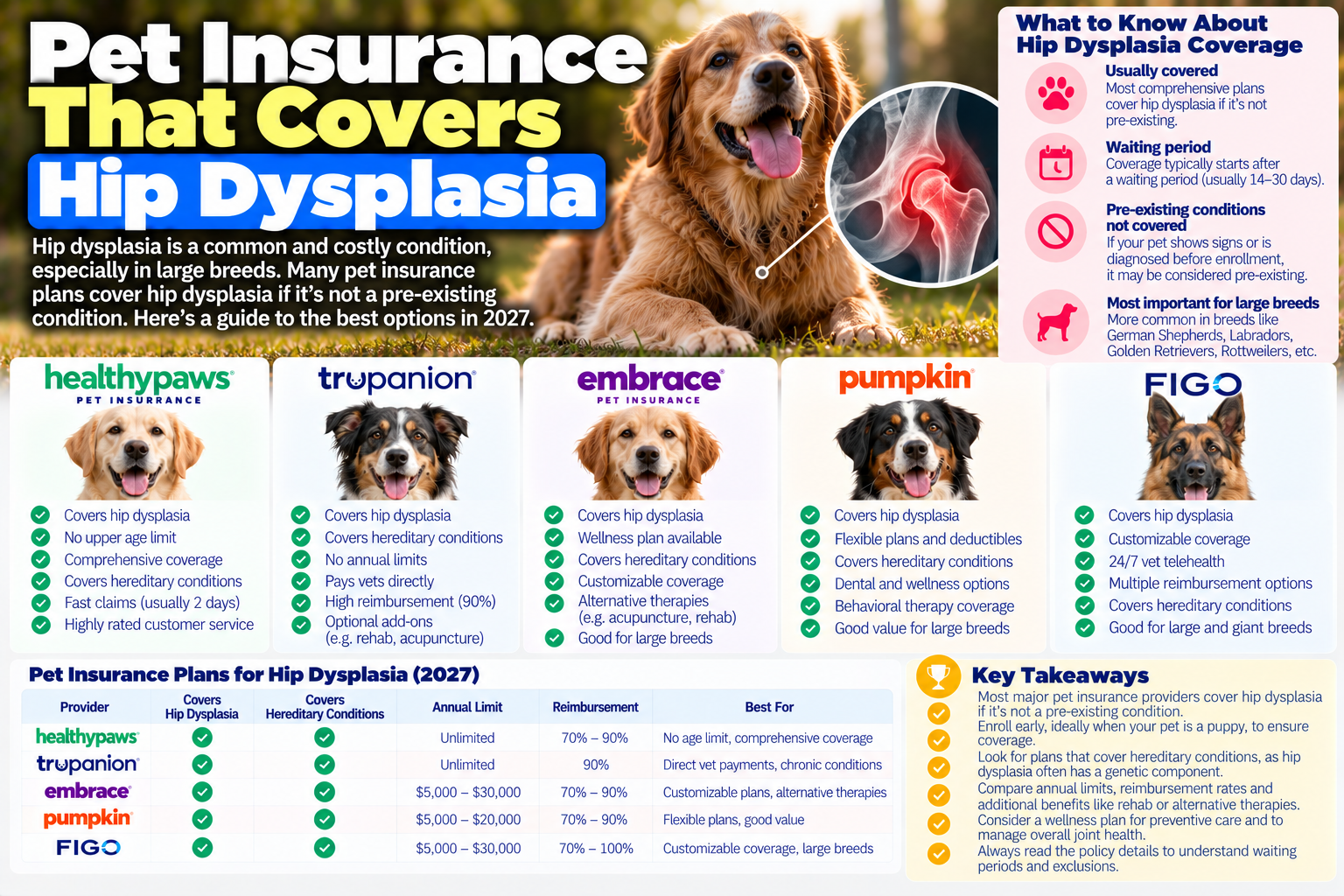
This guide covers everything you need to know about insurance that covers hip dysplasia. Quick answer: Most accident-and-illness plans cover hip dysplasia if it’s diagnosed after enrollment and after the waiting period. MetLife Pet, for example, reimburses up to 90% of diagnosis and treatment with no breed exclusions, no age cutoff, and no extended orthopedic waiting period. Treatment itself can run $4,000 to $14,500 or more, so coverage matters for this condition more than most.
Which pets are at highest risk
Hip dysplasia develops when the hip joint doesn’t form or fit correctly, and it’s far more common in some groups than others:
- Dogs: medium and large breeds, obese dogs, and puppies that grew too quickly. German Shepherds, Labradors, Rottweilers, and Bulldogs are specifically flagged as genetically predisposed (see German shepherd insurance) (see pet insurance cost by breed)
- Cats: larger breeds like Maine Coon and Himalayan, and obese cats, though it’s far less commonly discussed than in dogs
Insurers treat hip dysplasia as an orthopedic condition, a category that often gets its own rules — separate waiting periods, age restrictions, or bilateral exclusions. That don’t apply to illness coverage generally (see what pet insurance doesn’t cover).
What treatment actually costs
| Treatment | Cost range | Recovery |
|---|---|---|
| Femoral Head Osteotomy (FHO) | $1,200–$2,500 per hip | ~6 weeks |
| Total Hip Replacement (THR) | $3,500–$7,000+ per hip | ~3 months |
| Full diagnosis + treatment (either path) | $4,000–$14,500+ | Varies |
| Conservative management (PT, meds, supplements) | No fixed range — ongoing cost | Lifelong |
Cost climbs further if both hips need treatment, if your dog needs an emergency hospital rather than a scheduled surgery, or if complications extend hospitalization. A single average figure is close to meaningless here. The real range spans from under $2,000 to well over $15,000 depending on severity and whether one or both hips are affected.
Waiting periods and exclusions to watch for
Orthopedic conditions like hip dysplasia often get treated differently from a standard illness:
- Extended orthopedic waiting periods. Some insurers add a longer wait — often six months. Specifically for orthopedic conditions, on top of the standard 14-day illness wait. MetLife Pet is an exception: it applies no extended wait and uses its standard 0-day accident / 14-day illness periods
- Breed exclusions. Some providers exclude or limit coverage for breeds known to be predisposed, rather than pricing the risk into the premium
- Age cutoffs specific to the condition. A plan can have no general age limit but still decline to cover hip dysplasia if the pet is enrolled past a certain age
- Bilateral exclusions. If one hip is diagnosed as pre-existing, some insurers automatically exclude the other hip too, even if it has shown no symptoms
Always confirm these specifics with an insurer directly. They vary enough between providers that a general illness policy summary won’t tell you how hip dysplasia specifically is handled.
How to actually get covered
- Enroll before any sign of lameness, stiffness, or a vet mentioning hip dysplasia. Once it’s diagnosed, or even flagged during an exam, every insurer treats it as pre-existing (see pet insurance for pre-existing conditions)
- Enroll a high-risk breed as a puppy, ideally before the standard orthopedic waiting period could overlap with early symptoms. This sometimes show up as young as 5–6 months in predisposed breeds
- Ask directly whether the insurer applies an extended orthopedic waiting period and how long it is. This single question separates a plan that will actually help from one that excludes the condition by timing alone
- Ask about bilateral exclusions before buying, not after a claim is denied. If one hip is affected, find out now whether the other is automatically excluded too
- Choose a higher reimbursement percentage if you can afford it. With treatment potentially exceeding $14,000, the difference between 70% and 90% reimbursement is thousands of dollars
FAQ
Does pet insurance cover hip dysplasia? Yes, in most accident-and-illness plans, as long as it’s diagnosed after enrollment and after the waiting period. Including any extended orthopedic wait the insurer applies.
How much does hip dysplasia surgery cost without insurance? FHO surgery runs $1,200–$2,500 per hip, total hip replacement runs $3,500–$7,000+ per hip. Full diagnosis and treatment combined can reach $4,000–$14,500 or more.
Is hip dysplasia considered pre-existing if my dog is a high-risk breed? No — breed predisposition alone doesn’t make it pre-existing. Only an actual diagnosis, or symptoms that appear before enrollment or during the waiting period, trigger a pre-existing exclusion.
Which pet insurance has no extended waiting period for hip dysplasia? MetLife Pet is notable for applying no extended orthopedic waiting period. It uses its standard 0-day accident and 14-day illness waits for hip dysplasia like any other condition.
Bottom line
Hip dysplasia treatment can run into the thousands of dollars, which makes coverage genuinely valuable rather than a nice-to-have. But orthopedic conditions get their own set of rules at many insurers, from extended waiting periods to bilateral exclusions. If you own a predisposed breed, enroll before any symptom shows up, ask specifically how the insurer handles orthopedic conditions. Don’t assume a general illness policy summary tells you the whole story.
Sources
- Does Pet Insurance Cover Hip Dysplasia? — MetLife Pet Insurance
- Cost of Dog Hip Dysplasia Surgery — MetLife Pet Insurance
Key Takeaways on Pet Insurance That Covers Hip Dysplasia
Before you decide on insurance that covers hip dysplasia, get at least three quotes and compare them using the same deductible, reimbursement rate and annual limit. The right answer on insurance that covers hip dysplasia depends on your pet’s age and health, your budget and how much risk you are comfortable carrying yourself. Read the exclusions and waiting periods carefully, because that fine print matters more than the monthly price when you look at insurance that covers hip dysplasia.
Revisit insurance that covers hip dysplasia every year at renewal, since premiums and coverage rules change. If you are still unsure about insurance that covers hip dysplasia, start with the calculator on this site and then request official quotes. Use this guide as a starting point for insurance that covers hip dysplasia, and confirm current terms with the insurer before you buy.
By Joaquín Benicio Conforti · Last updated: October 2026