The cheapest pet insurance is not always the best deal, because low premiums often reflect trimmed coverage. The cheapest plan on a comparison page isn’t automatically a good deal. Some of them are cheap because they cut real coverage, not because they’re efficiently priced.
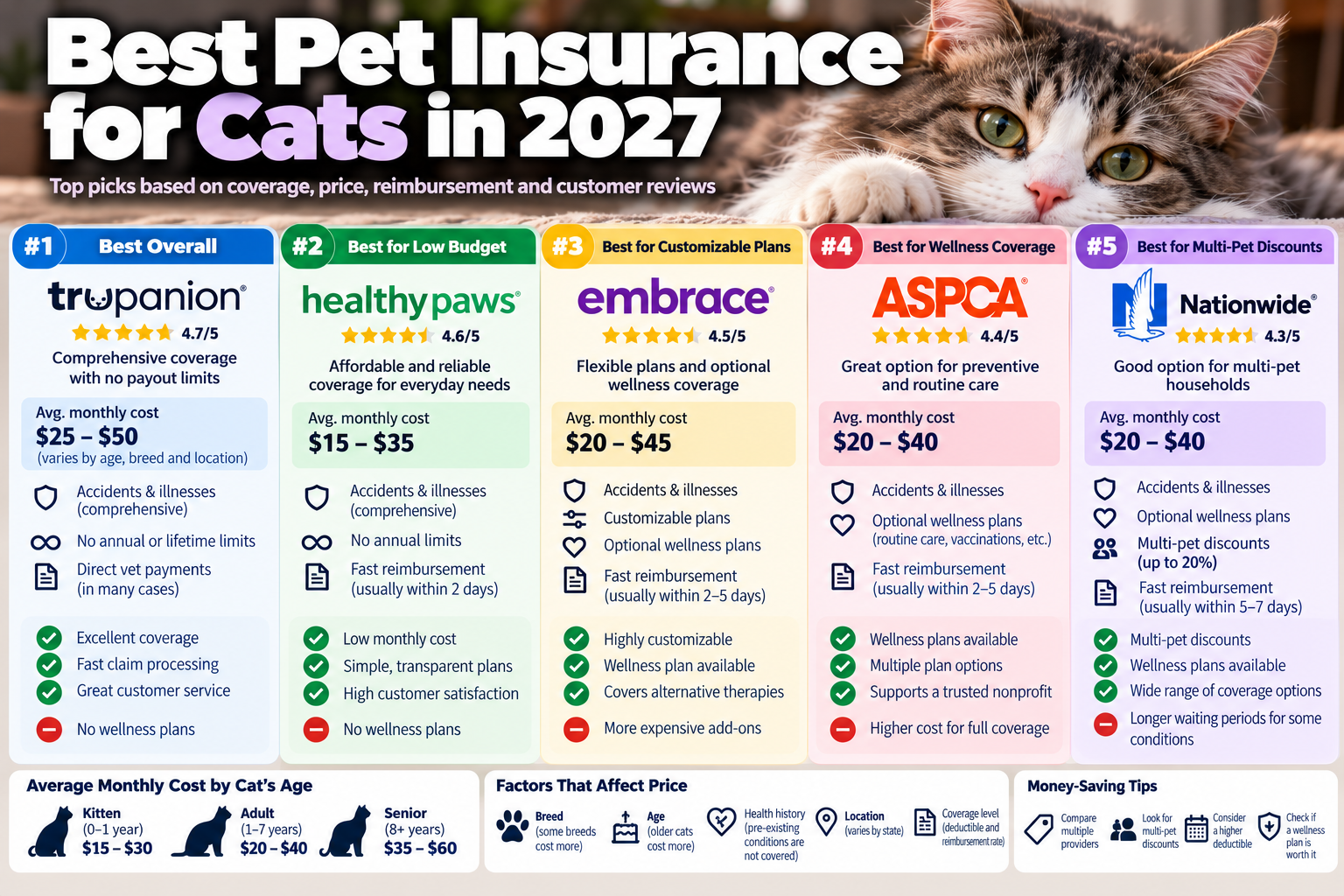
Quick answer: Spot and Lemonade are the cheap plans that still deliver real value. Spot for no upper age limit and included dental coverage, Lemonade for preventive-care add-ons and multi-pet discounts. The ones to watch out for are plans with low annual caps, long exclusion lists, or steep senior-age premium hikes. (see the best pet insurance companies)
The cheap plans that actually deliver
| Insurer | Sample rate | Why it’s a real deal, not just cheap |
|---|---|---|
| Spot | $13/mo cats, $27/mo dogs | No upper enrollment age limit; dental illness included at no extra cost |
| Lemonade | $21/mo cats, $38/mo dogs | Preventive-care add-ons available; up to 10% off for bundling or multi-pet |
| Healthy Paws | $41/mo cats, $53/mo dogs | Unlimited annual and lifetime payouts — best for a young, healthy pet that may need occasional emergency care |
The common thread: each gives up something specific in exchange for the lower price (an age cap, a feature, a payout structure), rather than quietly cutting coverage across the board. (see the best pet insurance for dogs) (Insurify)
Red flags in ultra-cheap plans
- Low annual payout caps. Some of the cheapest plans start their annual maximum as low as $2,500. Check that against what a real emergency could cost. (see average pet insurance costs)
- Narrow coverage. Basic plans can exclude emergency treatment, alternative therapies, or specific conditions like hip dysplasia.
- Age limits with steep increases. A plan that caps new enrollment around 13 and raises premiums sharply for older pets can get expensive fast as your pet ages.
- No direct vet payment. Several budget insurers only reimburse you after the fact — you still need the cash upfront for every vet visit.
- Limited state availability. Some of the cheapest-looking options simply aren’t sold everywhere; confirm before you build a decision around one.
- The usual waiting period and pre-existing rules still apply — a cheap price doesn’t mean a shortcut around either. (see pet insurance waiting periods) (see pet insurance for pre-existing conditions)
How to get cheap coverage without losing much
- Buy while your pet is young. Premiums climb with age no matter which insurer you pick, so enrolling early locks in the lower starting rate.
- Raise the deductible, but only to a number you could actually pay out of pocket the day a real claim happens. (see how pet insurance deductibles work)
- Skip add-ons you don’t need. Wellness/routine-care coverage adds real monthly cost — drop it if you’re mainly buying protection against the unexpected.
- Use multi-pet discounts. Several insurers knock 5–10% off per additional pet insured on the same account.
- Compare quotes for your actual pet. Rates vary by breed, age and location. So the «cheapest» insurer on a ranking page may not be cheapest for your specific animal. (see how pet insurance works)
- If insurance still doesn’t fit your budget, ask your vet directly about payment plans before skipping coverage altogether.
Frequently asked questions
Is the absolute cheapest plan ever the right call?
Sometimes — if you’ve checked the annual cap, exclusions, and age limit against your pet’s actual risk and they hold up, the lowest price can be a genuinely good pick, not just a compromise.
How much can multi-pet discounts actually save?
Commonly around 5–10% per additional pet at insurers that offer it — worth asking about even when it isn’t advertised up front.
Does a cheap plan mean a slower claims process?
Not necessarily — price tier and claim speed aren’t directly linked; check an insurer’s claims process and reviews separately from its price.
Should I pick the cheapest plan for an older pet?
Be careful — several budget insurers cap enrollment age or raise premiums sharply for seniors. So the «cheap» price may not hold for long with an older pet.
The bottom line
«Cheapest» and «worth it» aren’t the same question. The plans that pass both tests give up something specific and visible (an age cap, a feature) rather than hiding the trade-off in exclusions you’d only discover at claim time. Spot and Lemonade earn their place on price without obvious gaps. Anything cheaper than that deserves a close look at its annual cap and exclusion list before you buy.
Sources
- Insurify — insurify.com
Key Takeaways on Cheapest Pet Insurance
- The cheapest plan on a comparison page is not automatically a good deal.
- Some plans are cheap because they cut real coverage.
- Compare deductible, reimbursement and annual limit before you look at price.
By Joaquín Benicio Conforti · Last updated: October 2026
Related guides
- Best Pet Insurance for Dogs: Top Picks by Budget
- Accident-Only vs Accident & Illness Pet Insurance
- Best Pet Insurance Companies (2026)
This article is for general information and isn’t personalized financial advice. Pricing, discounts and plan details vary by insurer, pet and state, and change over time — confirm current terms before buying.
Sources
- Insurify, Cheapest Pet Insurance Companies (2026)