Quick answer: The best pet insurance for cats costs far less than dog coverage. Cats average about $23 a month nationally, versus $43 for dogs. Lemonade and Pumpkin are the standout value picks. Figo, Wagmo, Embrace and Trupanion are solid alternatives, depending on whether you want direct vet pay, no age limits or routine care reimbursed. See how much pet insurance costs for the wider picture.
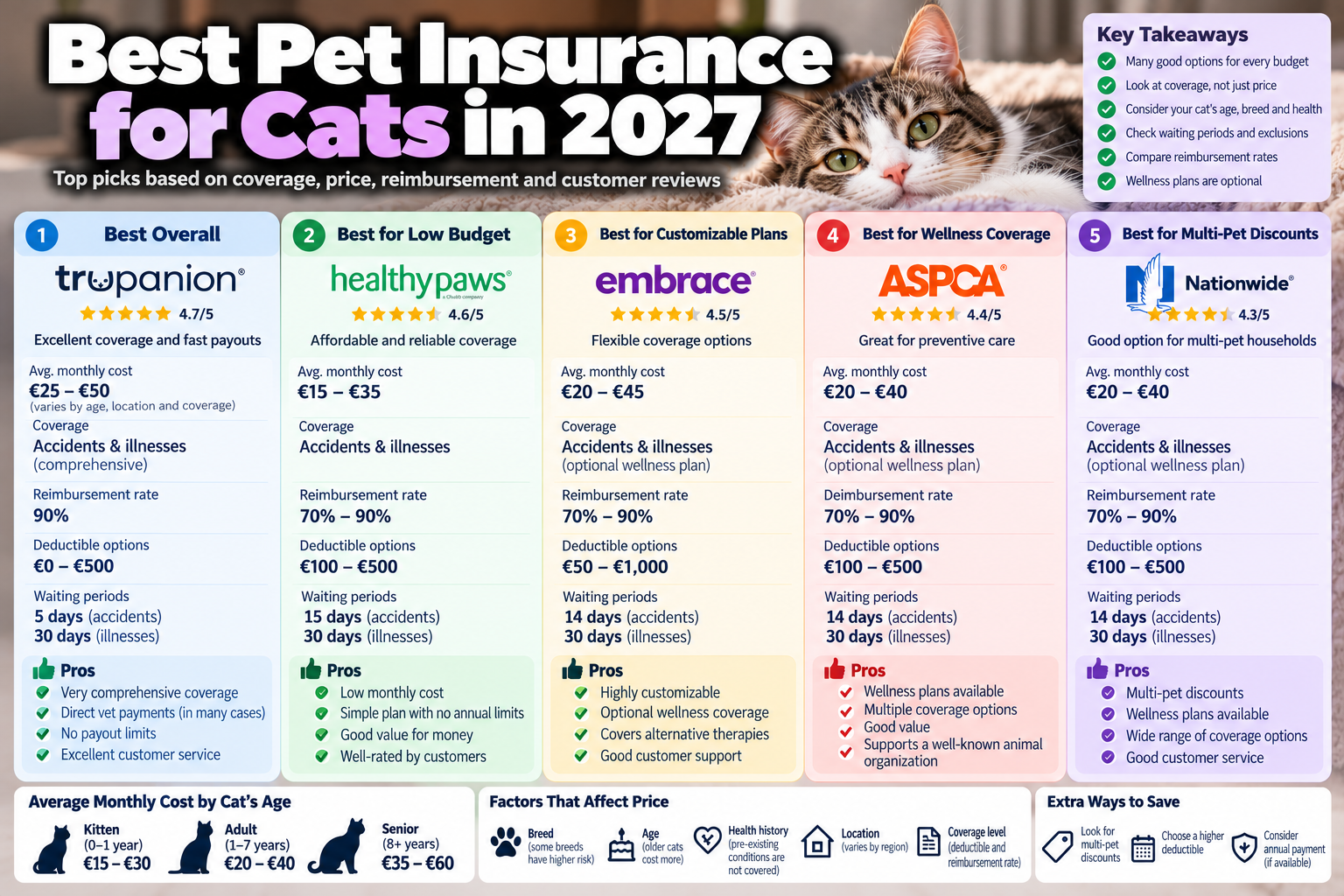
Cat insurance gets less attention than dog plans, but it is usually the better deal. Lower vet bills on average mean lower premiums for the same kind of protection.
Average cat insurance rates by insurer
| Insurer | Avg. monthly rate, cats |
|---|---|
| Spot | $13 |
| Figo | $14 |
| Lemonade | $21 |
| Prudent Pet | $27 |
| Pets Best | $28 |
| Pumpkin | $32 |
| Healthy Paws | $41 |
Rates come from Insurify and reflect averages across breeds and locations. Annual limits run $2,500 to unlimited, deductibles $250–$1,000 and reimbursement 70–90%. Get a quote for your own cat, because breed, age and location all move the number.
Standout picks
Sample rates come from TheSwiftest. Confirm current pricing directly, since these shift over time. Our guides to reimbursement rates and the best pet insurance companies explain the terms.
Why cats cost less to insure
Cats generate smaller average vet bills than dogs. They have fewer size-related orthopedic problems and no breed-driven emergency surgeries at the scale dogs see. That shows up in the premium: about $23 a month for cats versus $43 for dogs.
Conditions worth checking coverage for
- Dental illness: covered by some insurers, like Pumpkin, at no extra cost, and excluded or limited by others.
- Hereditary conditions: confirm these for pedigreed breeds, since coverage varies by insurer.
- Cancer treatment: can exceed $10,000, so check your annual benefit cap against that number.
- Routine and preventive care: vaccines and heartworm prevention are usually a separate wellness add-on. Read how pet insurance works for the basics.
Enroll as early as possible, ideally before your cat’s first birthday. Pre-existing condition rules apply the same way they do for dogs. See our guide to pre-existing conditions.
How to choose
- Want the cheapest real coverage? Lemonade or Figo lead on price among the picks above.
- Older cat or no upper age limit needed? Pumpkin has no breed or age restrictions.
- Want routine care reimbursed too? Wagmo folds preventive care into its plan.
- Hate paying upfront and waiting? Trupanion can pay the vet directly.
- Breed-specific concerns? Confirm exclusions with the insurer before you buy.
Indoor cats, outdoor cats and waiting periods
Cats are good at hiding illness, so a problem is often advanced by the time an owner notices it. That is one reason to enroll early. An indoor cat still faces urinary, dental and kidney problems, and an outdoor cat adds injuries and infections from fights and traffic.
Whatever your cat’s lifestyle, read the waiting periods for illness and for any condition you already worry about. Coverage only helps for problems that start after the policy is active.
A worked example: a urinary blockage
The numbers are illustrative, not a quote. A male cat with a urinary blockage needs emergency care that can run $3,000 including hospital stay, fluids and a catheter. With a $500 deductible and an 80% reimbursement rate, the insurer pays 80% of the remaining $2,500, which is $2,000. You pay $1,000.
Insuring more than one cat
Each cat has its own policy and its own deductible. Ask whether the insurer offers a multi-pet discount, and compare the total for the household rather than the price of one plan. If one of your cats has a health condition, you can still insure the others without that condition affecting them.
Frequently asked questions
Do indoor cats need insurance too?
Yes. Illness, not just outdoor injury risk, drives most cat claims. Indoor cats still get sick, need dental work and develop chronic conditions.
Is it worth insuring an older cat?
It is harder to justify on cost, since premiums rise with age. A plan with no upper age limit, like Pumpkin, at least keeps the option open. See whether pet insurance is worth it.
Does breed affect the price much for cats?
Less than for dogs. Pedigreed breeds with known hereditary risks can still see higher quotes than mixed-breed cats.
Can I switch cat insurers later without losing coverage?
You can switch. But any condition diagnosed under the old insurer can become newly excluded as pre-existing under the new one.
The bottom line
Cat insurance is cheaper than dog insurance across the board, which makes it an easier yes for most budgets. Lemonade and Pumpkin lead on value. Figo, Wagmo, Embrace and Trupanion are worth a look depending on whether you want routine care, no age limits or direct vet pay. Get quotes for your actual cat and enroll early.
Sources
- Insurify — insurify.com
Key Takeaways on Best Pet Insurance For Cats
- Cats average about $23 a month nationally against $43 for dogs, so the best pet insurance for cats is usually the cheaper policy in the household.
- Lemonade and Pumpkin stand out for value; compare them with Figo, Wagmo, Embrace and Trupanion before you pick.
- Enroll while your cat is young, before any condition can be treated as pre-existing.
By Joaquín Benicio Conforti · Last updated: October 2026
Related guides
- How to Compare Pet Insurance Quotes in 10 Minutes
- Pet Insurance That Pays the Vet Directly
- Pet Insurance With No Annual Limit: Full Comparison
This article is for general information and isn’t personalized financial advice. Pricing and plan details vary by insurer, cat and state, and change over time. Confirm current terms before buying.
Sources
- Cheapest Pet Insurance Companies (Insurify, 2026)
- Best Cat Insurance Plans Compared for 2026 (TheSwiftest)