This guide covers everything you need to know about acl ccl surgery. Quick answer: Most major insurers cover ACL/CCL (knee ligament) surgery, but with a catch. Many apply a longer waiting period just for knee and ligament injuries, often 6 months to a year, versus the usual 14 days for illness. Several will waive it if a vet confirms the knee is healthy early in the policy. Surgery itself runs $1,200 to $6,000+ per knee depending on the technique.
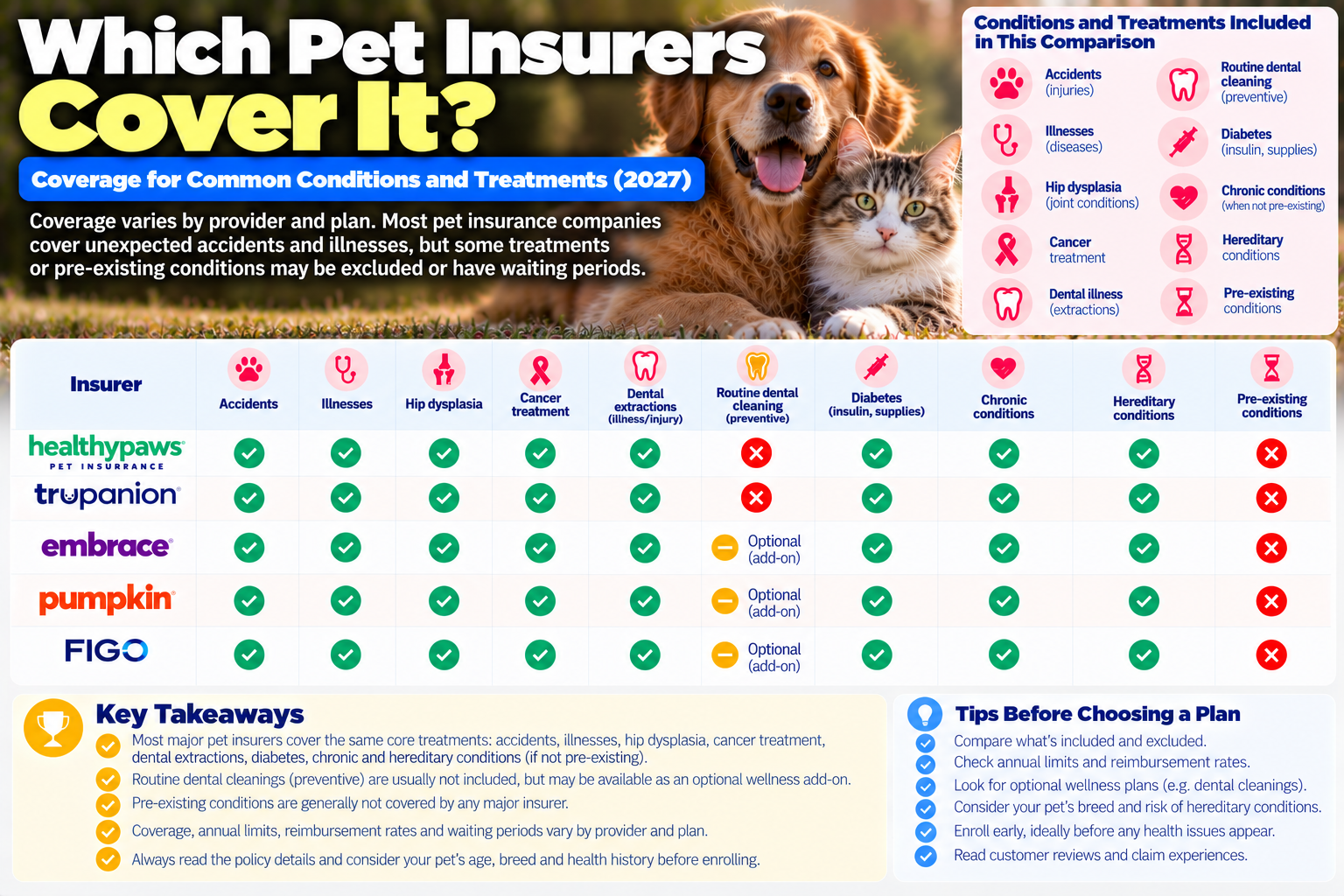
Waiting period by insurer, and how to waive it
| Insurer | Waiting period | Waiver option |
|---|---|---|
| MetLife | 0 days (accident) / 14 days (illness) | None needed — no extended wait |
| Trupanion | 5 days (accident) / 14 days (illness) | Excludes cruciate issues on either leg within 18 months before the start date (see our Trupanion review) |
| Pumpkin | 14 days | Not waivable; no extended knee wait |
| Liberty Mutual | 14 days | Not waivable |
| Spot | 14 days | Waivable with a health assessment (3 days before to 7 days after enrollment) |
| ASPCA | 14 days | Waivable with a health assessment (same window as Spot) |
| Healthy Paws | 15 days | Waivable with a complete clinical exam by a licensed vet (see our Healthy Paws review) |
| Wagmo | 3–15 days | Waivable with a vet exam within 15 days, submitted with the first claim |
| AKC | 180 days | Waivable in some states with a vet exam within 7 days of enrollment |
| Embrace | 6 months | May be reduced in some states; no orthopedic waiver mentioned |
| Fetch | 6 months | Waivable in some states with a vet exam within 30 days |
| Figo | 6 months | Waivable in some states with a healthy orthopedic exam in the first 30 days |
| Lemonade | 6 months | None listed |
| Pets Best | 6 months | Waivable with a health assessment (same window as ASPCA) |
| Prudent Pet | 6 months | Waivable if a vet confirms no knee/ligament issues within 30 days |
| Nationwide | 12 months | Not waivable |
The pattern: insurers with a short standard illness wait (MetLife, Pumpkin, Liberty Mutual) tend to apply it to knees too. Meanwhile, most others carve out knee/ligament injuries specifically for a much longer wait — unless you catch the waiver window.
What treatment costs, per knee
| Treatment | Cost range |
|---|---|
| Traditional repair (extracapsular/lateral suture, TightRope) | $1,200–$2,500 |
| TPLO (tibial plateau leveling osteotomy) | $3,000–$6,000+ |
| TTA (tibial tuberosity advancement) | $3,000–$6,000+ |
| Conservative management (rest, PT, weight control, medication) | $500–$1,000+ |
| Alternative therapies (laser, prolotherapy) | $200+ per visit, often not covered |
TPLO and TTA cost more than traditional repair but tend to produce better long-term function, especially in larger dogs. Many general practices don’t perform bone-cutting surgeries like TPLO, so a specialist referral is common and adds to the cost. The bigger number to plan for: a large share of dogs eventually injure the other knee too, which can roughly double the total to $10,000 or more across both legs.
The second-knee problem
Given how often the other knee goes next, bilateral exclusions matter as much as the waiting period. The clearest documented rule: Trupanion excludes cruciate ligament problems on either leg if they occurred within 18 months before the policy’s effective date. So a prior issue on the healthy-looking leg can still disqualify it later.
More generally, insurers typically won’t cover the second knee if it was already showing problems before the policy started. The same pre-existing-condition logic applied leg by leg (see pet insurance for pre-existing conditions). The reassuring side: if neither leg showed any sign of trouble before enrollment, both surgeries are typically reimbursed if each is later diagnosed independently.
How to actually get the waiver
- Book the vet exam immediately after enrolling, not weeks later. Most waiver windows run 7–30 days from the policy’s start date, and missing it means defaulting to the full 6–12 month wait
- Ask the insurer exactly what the exam needs to confirm. Several require the vet to specifically rule out knee or ligament issues, not just do a general wellness check
- Keep the exam paperwork, since some insurers (Wagmo, for example) want it submitted along with your first claim, not just kept on file
- Enroll before any limping, favoring, or stiffness shows up, even mild or occasional. Any sign noticed before enrollment or during the waiting period gets the condition classified as pre-existing regardless of the waiver
- If you own a high-risk breed, ask about the waiver before you buy, not after. It’s one of the few details worth comparing insurers on directly
FAQ
Does pet insurance cover ACL/CCL surgery? Yes, in most comprehensive plans, but many apply a longer waiting period. Often 6 months to a year — specifically for knee and ligament injuries, separate from the standard illness wait.
Which pet insurance has the shortest waiting period for ACL surgery? MetLife applies no extended wait, using its standard 0-day accident / 14-day illness periods. Pumpkin and Liberty Mutual also use a standard 14-day wait with no knee-specific extension.
Can I waive the waiting period for knee surgery? Often yes. Several insurers (ASPCA, Spot, Healthy Paws, Fetch, Figo, Pets Best, Prudent Pet, Wagmo, AKC) will waive the extended wait if a vet confirms the knee is healthy within a set window, usually 7–30 days after enrollment.
Will pet insurance cover the second knee if the first already had surgery? Usually yes, if the second knee showed no signs of trouble before enrollment. Trupanion is a documented exception — it excludes cruciate issues on either leg if problems occurred within 18 months before the policy started.
Bottom line
ACL/CCL surgery is covered by nearly every major insurer, but the timing rules around it. Extended waiting periods, waiver windows, and bilateral exclusions — decide whether that coverage actually helps when you need it. With surgery running $1,200 to $6,000+ per knee and a real chance of needing both knees done eventually, the insurer you pick and how fast you book that waiver exam matters more here than for almost any other condition.
Sources
- Does Pet Insurance Cover ACL Surgery? — MoneyGeek
- Dog ACL Surgery Cost — Pawlicy
Key Takeaways on Acl Ccl Surgery
Before you decide on acl ccl surgery, get at least three quotes and compare them using the same deductible, reimbursement rate and annual limit. The right answer on acl ccl surgery depends on your pet’s age and health, your budget and how much risk you are comfortable carrying yourself. Read the exclusions and waiting periods carefully, because that fine print matters more than the monthly price when you look at acl ccl surgery.
Revisit acl ccl surgery every year at renewal, since premiums and coverage rules change. If you are still unsure about acl ccl surgery, start with the calculator on this site and then request official quotes. Use this guide as a starting point for acl ccl surgery, and confirm current terms with the insurer before you buy.
Before you decide on acl ccl surgery, get at least three quotes and compare them using the same deductible, reimbursement rate and annual limit.
By Joaquín Benicio Conforti · Last updated: October 2026