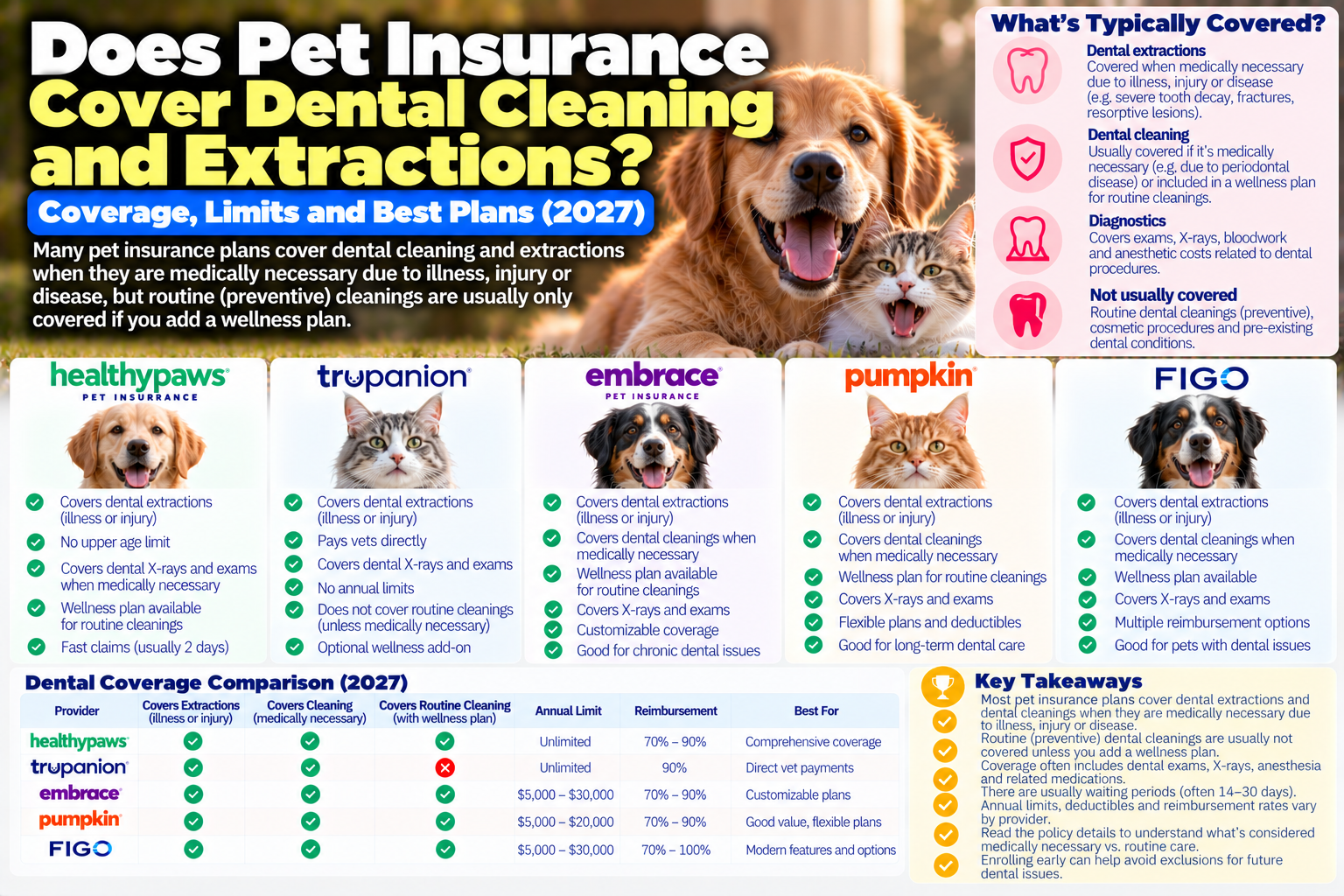
This guide answers a common question: does pet insurance cover dental cleaning? Quick answer: It depends on what kind of dental work it is. A standard illness plan generally covers dental disease — extractions, gum disease treatment, surgery — but not routine cleanings, which usually need a separate add-on. A dog tooth extraction alone can run $500 to $2,500, so the distinction between «covered» and «not covered» matters a lot here.
The distinction that decides what’s covered
Insurers split dental work into two categories, and they’re treated completely differently:
- Routine cleaning is a preventive, typically annual procedure done under anesthesia — pre-anesthetic bloodwork, plaque and tartar removal, polishing, sometimes fluoride. This is treated like wellness care, not illness.
- Dental disease treatment covers conditions like gingivitis and periodontal disease, including extractions, oral surgery, and medications. This is treated as illness coverage, the same way a standard accident-and-illness plan treats any other diagnosed condition.
A standard accident-and-illness policy’s base coverage typically pays for dental accidents — a fractured or knocked-loose tooth — but not dental illness or routine cleanings. Those need an add-on.
How dental add-ons are typically structured
Lemonade’s tiered dental options illustrate how this usually works across insurers (see our Lemonade pet insurance review):
| Coverage level | Covers | Doesn’t cover |
|---|---|---|
| Base accident & illness | Dental accidents (fractures, tooth luxation) | Dental illness, routine cleanings |
| Dental Illness add-on | Extractions, oral surgery, gum disease | Routine cleanings |
| Dental Care add-on (enhanced, select states) | Dental illness AND routine cleanings, no deductible, pre-existing dental conditions | Only addable while the pet is 0–3 years old |
The enhanced add-on’s age cutoff is the detail most owners miss. If you wait until your pet already has dental issues to look for comprehensive dental coverage, the best version of it may no longer be available to you.
What it actually costs
| Procedure | Cost range |
|---|---|
| Tooth extraction | $500–$2,500 |
| Routine dental cleaning (with bloodwork, X-rays) | Varies by clinic — adds to the base cleaning fee |
A few things push the price up within that extraction range: a firmly rooted adult tooth costs more to remove than a loose baby tooth, an impacted or fractured tooth raises the difficulty, a veterinary dental specialist typically charges more than a general practice vet. An older dog’s anesthesia risk (especially with a heart murmur or kidney issues) can add monitoring and medication costs. Location matters too — clinics in large cities generally charge more than rural practices.
Common exclusions to check for
- At-home dental products — brushes, dental chews, water additives — are never covered
- Orthodontic treatment is typically excluded outright
- Pre-existing dental conditions are excluded unless you specifically have an enhanced add-on that covers them (see pet insurance for pre-existing conditions)
- Treatment during the waiting period doesn’t count, same as any other condition
- Dental illness with no dental add-on isn’t covered at all — the base policy alone won’t help with periodontal disease or extractions
- Routine cleanings under a Dental Illness-only add-on still aren’t covered — you need the broader tier specifically for that
- Exam fees and anesthesia not tied to a covered procedure may be excluded depending on the plan
Availability of these tiers varies by state, so confirm exactly what’s offered where you live before assuming a specific add-on exists.
FAQ
Does pet insurance cover tooth extractions? Yes, if the extraction is due to dental disease and you have a dental illness add-on (or it’s included in your base plan’s illness coverage). But not under a base plan with no dental coverage at all.
Does pet insurance cover routine teeth cleaning? Usually not under a standard illness add-on. Routine cleaning is treated as preventive wellness care and typically needs a separate, broader add-on that explicitly includes it.
Why doesn’t my pet insurance cover dental cleaning? Most base and even dental-illness add-on plans treat routine cleaning as preventive care rather than illness treatment. So it’s excluded unless you add a wellness or enhanced dental tier.
How much does a dog tooth extraction cost without insurance? Typically $500 to $2,500, depending on the complexity of the extraction, whether a specialist performs it, and the dog’s age and health.
Bottom line
Dental coverage is one of the most misunderstood parts of a pet insurance policy, mostly because «dental» isn’t one thing. Routine cleaning and dental disease treatment are priced and covered completely differently. A base plan will usually help with an extraction caused by disease, but not a routine cleaning. The broader add-ons that cover both often come with age cutoffs. Read the specific tier you’re buying rather than assuming «dental coverage» means everything is included.
Sources
- Does Pet Insurance Cover Dental Care? — Lemonade
- Dog Tooth Extraction: Cost, Procedure, & Recovery — MetLife Pet Insurance
Key Takeaways on Pet Insurance Cover Dental Cleaning
Before you decide on pet insurance cover dental, get at least three quotes and compare them using the same deductible, reimbursement rate and annual limit. The right answer on pet insurance cover dental depends on your pet’s age and health, your budget and how much risk you are comfortable carrying yourself. Read the exclusions and waiting periods carefully, because that fine print matters more than the monthly price when you look at pet insurance cover dental.
Revisit pet insurance cover dental every year at renewal, since premiums and coverage rules change.
By Joaquín Benicio Conforti · Last updated: October 2026