Quick answer: Dog surgery costs range from about $150 for a basic neuter to $10,000 or more for TPLO knee surgery on a large dog. Routine procedures (spay, neuter, dental extraction) typically fall between $150 and $2,500. Orthopedic and emergency surgeries (TPLO, foreign body removal, splenectomy) commonly run $3,000 to $10,000, especially per knee or per incident.
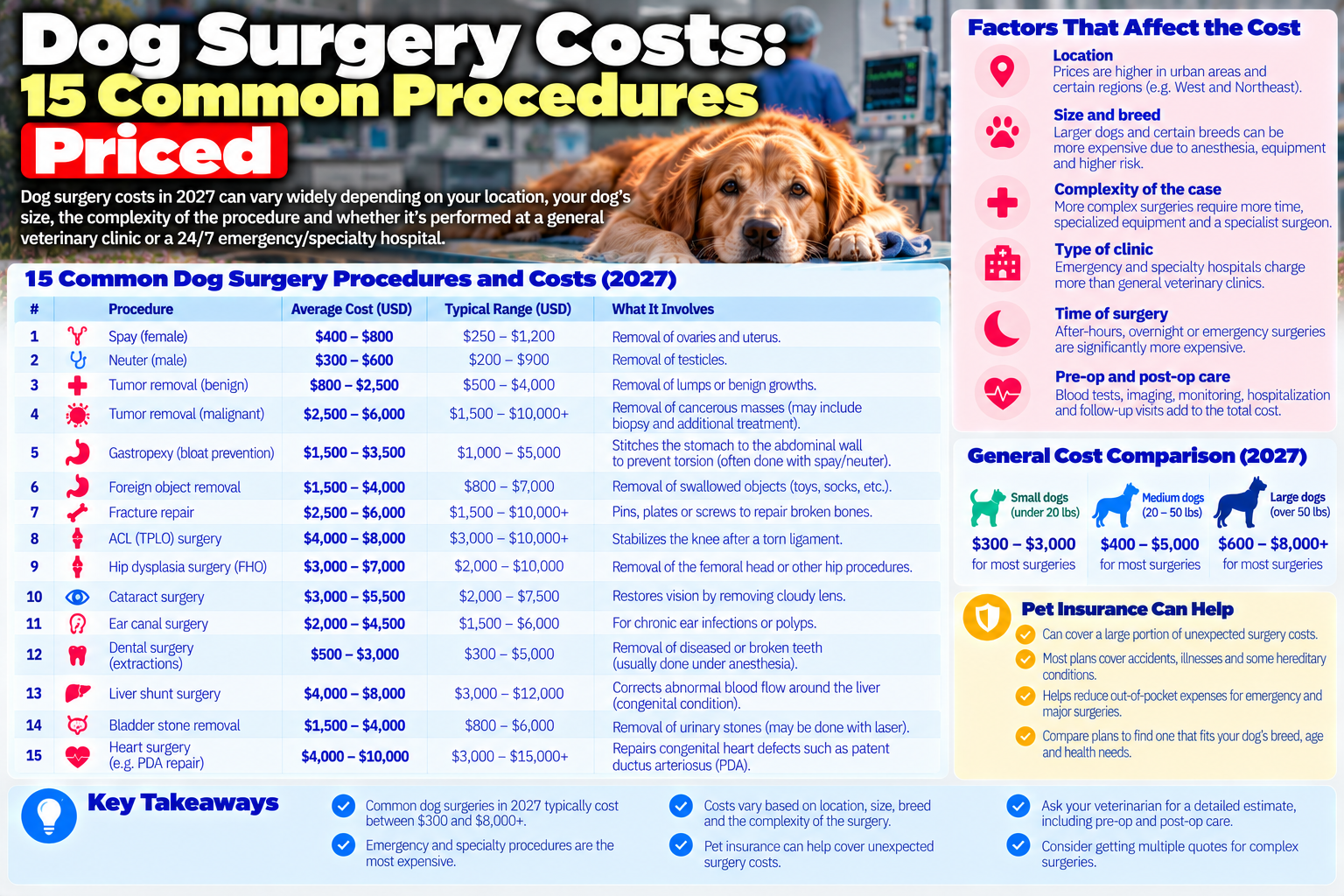
15 Common Dog Surgeries, Priced
These are national price ranges compiled from veterinary and pet-insurance sources. Your actual bill depends heavily on location, your dog’s size, and whether the procedure is routine or an emergency. source
| Procedure | Typical cost range |
|---|---|
| Neuter (orchiectomy) | $150 – $600 |
| Spay (ovariohysterectomy) | $200 – $2,000 |
| Tooth extraction | $500 – $2,500 |
| Mass / tumor removal | $500 – $5,000 |
| Gastropexy (preventive bloat surgery) | $500 – $2,000+ |
| C-section | $500 – $3,500+ |
| Entropion repair (eyelid) | $600 – $2,000 (avg. ~$1,400) |
| Cherry eye repair | $500 – $3,500 |
| Leg amputation | $1,000 – $2,000 |
| FHO (femoral head ostectomy) | $1,200 – $2,500+ |
| Cystotomy (bladder stone removal) | $1,500 – $3,500 |
| Splenectomy | $3,500 – $5,000 |
| Cruciate / ACL repair (non-TPLO) | $4,000 – $6,000 |
| Foreign body removal (GI obstruction) | $3,000 – $7,000 |
| TPLO (per knee) | $6,000 – $10,000 |
Notice the pattern: soft-tissue and routine procedures (neuter, dental, mass removal) stay under $2,500 in most cases. Meanwhile, anything orthopedic or involving emergency abdominal surgery climbs fast. And TPLO is priced per knee, so a dog needing both knees done pays that range twice.
Why the Same Surgery Can Cost So Differently
The wide ranges above aren’t vague — they reflect real variables that change your actual bill:
- Dog size. Bigger dogs need more anesthesia, larger surgical teams, and sometimes specialized equipment, which raises the price for almost every procedure on this list.
- Location and clinic type. A general practice in a rural area charges less than a specialty hospital in a major metro. Urban areas and regions with a high cost of living run higher across the board.
- Timing. Scheduled, daytime surgery is cheaper than an emergency or after-hours procedure. A dog C-section, for example, can double in price if it happens overnight.
- Surgeon specialization. TPLO and FHO are typically performed by board-certified veterinary surgeons, not general practitioners, and that expertise is priced in.
- What’s bundled in. The «surgery» price often excludes anesthesia, pre-op bloodwork, X-rays, hospitalization, and post-op medication. Ask whether a quote is all-in or just the procedure itself.
- Complications. Infection, delayed healing, or a second surgery (common with entropion, which sometimes needs two procedures to avoid overcorrection) adds unplanned cost on top of the base estimate.
The Three Priciest Procedures, Explained
TPLO (Tibial Plateau Leveling Osteotomy) — $6,000 to $10,000 per knee. This is the gold-standard repair for a torn cranial cruciate ligament (the dog equivalent of an ACL tear) in medium and large breeds. It requires a board-certified surgeon, specialized plates and screws, and post-op imaging to confirm healing. Which is why it costs more than double a standard cruciate repair. If your dog tears both ligaments (common, since one injury often overloads the other knee), budget for two separate surgeries. See our dedicated ACL/CCL surgery and insurance guide for how different insurers handle this.
Foreign body removal — $3,000 to $7,000. Dogs that swallow socks, toys, or bones often need emergency abdominal surgery to remove the obstruction before it perforates the intestine. The range is wide because cost depends on how far the object traveled, how much intestine is damaged, and whether a section of bowel needs to be removed and reconnected.
Splenectomy — $3,500 to $5,000. Often performed after a splenic tumor ruptures and causes internal bleeding — frequently an emergency. The spleen itself is straightforward to remove. But the surgery is usually bundled with blood transfusions, overnight ICU monitoring, and biopsy of the removed tissue to check for cancer, which is what drives the total up.
How to Lower the Bill — or Cover It
- Get a written estimate first. Ask what’s included (anesthesia, bloodwork, pain meds, follow-ups) and what could push the price higher mid-surgery.
- Compare a specialty hospital vs. a general practice. For procedures a general vet can perform safely (many mass removals, routine spays), a GP is usually cheaper than a referral specialist. But for TPLO or FHO, the specialist’s experience is worth paying for.
- Ask about payment plans or CareCredit. Many clinics offer in-house financing or accept CareCredit for surgeries over $1,000.
- Enroll in pet insurance before a problem shows up. Accident-and-illness plans typically reimburse 70-90% of surgeries like foreign body removal, splenectomy, or ACL/TPLO repair. But only for conditions that start after your policy is active. A cruciate tear diagnosed before enrollment becomes a pre-existing condition and won’t be covered.
- Preventive surgery can be cheaper than reactive surgery. Gastropexy (bloat prevention), often done at the same time as a spay or neuter, costs a few hundred dollars. Far less than the $2,500-$8,000+ emergency bloat surgery it can help prevent.
Not sure whether coverage is worth it for your dog’s breed or age? Our pet insurance calculator estimates a monthly premium based on your specifics.
FAQ
Why is TPLO so much more expensive than a regular ACL repair? TPLO requires cutting and repositioning the shinbone with a metal plate to change the knee’s biomechanics, which demands a board-certified surgeon, specialized hardware, and follow-up X-rays to confirm proper healing. All of which a simpler suture-based repair doesn’t need.
Does pet insurance cover any of these surgeries? Yes, for most accident-related and newly-diagnosed illness surgeries (foreign body removal, splenectomy, ACL/TPLO, cherry eye), as long as the condition started after your policy’s waiting period and isn’t excluded as a breed-specific or pre-existing condition.
Is spay/neuter ever covered by insurance? Rarely by standard accident-and-illness plans, since it’s an elective, planned procedure. Some insurers offer it only through an optional wellness add-on.
Can I get a second opinion on a surgery quote? Yes, and it’s often worth it for anything over $1,500. Prices for the same procedure can vary by hundreds or thousands of dollars between a general practice and a specialty referral hospital.
What’s the cheapest way to handle a torn ACL in a small dog? Small dogs (under ~20-25 lbs) sometimes recover with strict rest and physical therapy instead of surgery, which your vet can assess. For larger or very active dogs, surgery is usually recommended.
Bottom Line
Most routine dog surgeries (neuter, dental, mass removal) land between $150 and $2,500. Meanwhile, orthopedic and emergency procedures (TPLO, foreign body removal, splenectomy) commonly run $3,000 to $10,000 — and TPLO is priced per knee. Get a written, itemized estimate before any surgery, ask what’s bundled in versus billed separately. If your dog is still healthy, enrolling in pet insurance now is the main way to make a future $5,000+ surgery bill manageable.
Sources
- Lemonade – Dog Surgery 101: Costs, Care, & More
- Lemonade – TPLO Surgery for Dogs Cost
- Lemonade – Cherry Eye Surgery Cost for Dogs
- MetLife Pet Insurance – Dog Tooth Extraction Cost
- MetLife Pet Insurance – Dog Leg Amputation Cost
- MetLife Pet Insurance – FHO Surgery in Dogs
- CatsLuvUs – Gastropexy Surgery Cost
- Hepper – Entropion Surgery Cost for Dogs
- Tyche Softwares – Dog C-Section Cost Guide
Key Takeaways on Dog Surgery Costs
When you weigh dog surgery costs, the right choice comes down to your pet’s age, health and your monthly budget. Before you commit to dog surgery costs, compare at least three written quotes and read the exclusions line by line. The main takeaway on dog surgery costs is simple: match the plan to the risks you cannot afford to cover yourself.
Keep these points about dog surgery costs in mind, and revisit your decision every year at renewal. Good decisions about dog surgery costs start with real quotes, not averages, so run the numbers for your own pet. If dog surgery costs still feels confusing, write down your budget, your deductible and your must-have coverage first.
When you weigh dog surgery costs, the right choice comes down to your pet’s age, health and your monthly budget. Before you commit to dog surgery costs, compare at least three written quotes and read the exclusions line by line. The main takeaway on dog surgery costs is simple: match the plan to the risks you cannot afford to cover yourself.
Last updated: October 2026